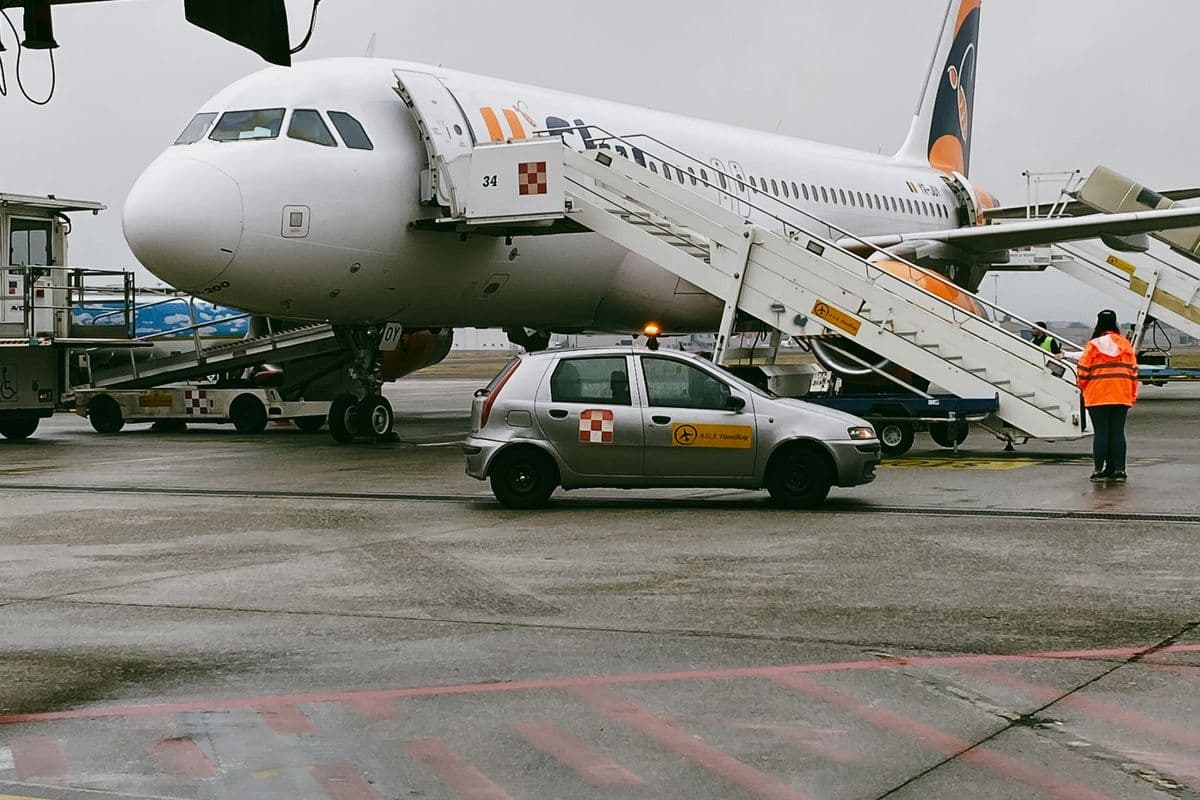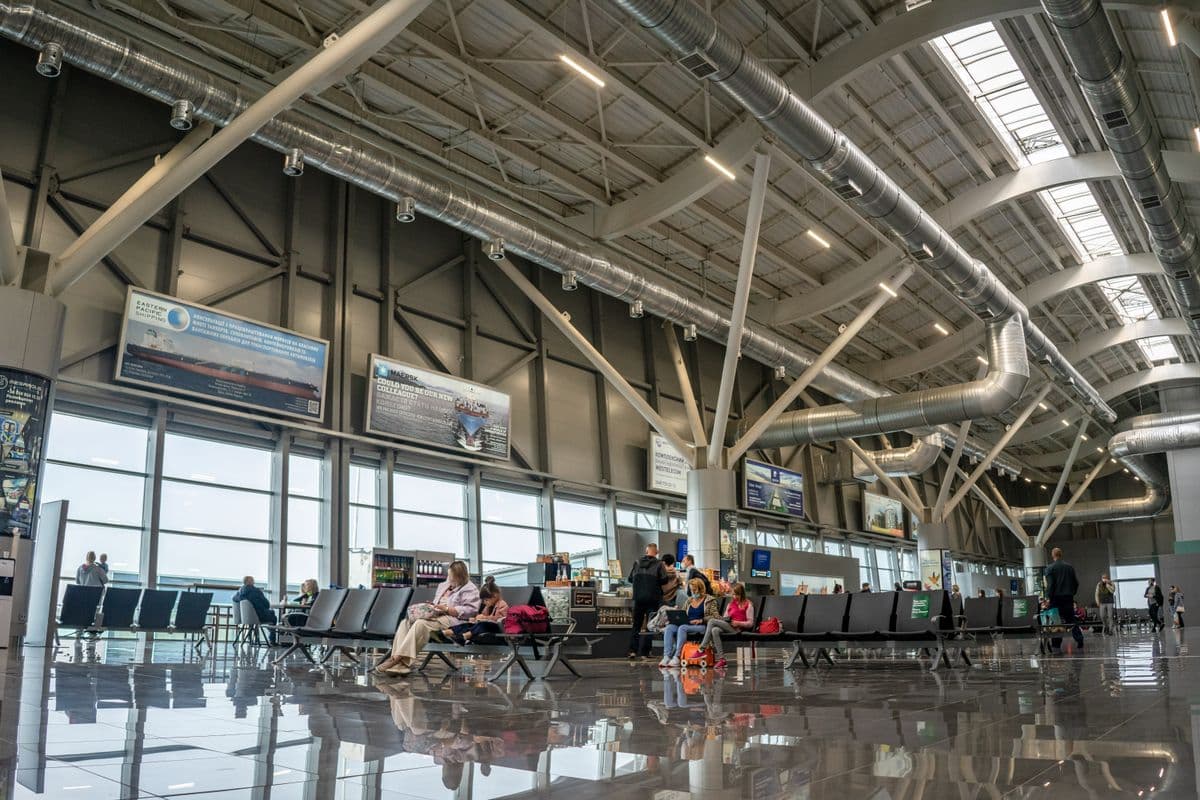
Passport Control and Customs at Vienna International Airport (VIE)
Whether you meet a border officer at Vienna Airport depends entirely on where you are flying to or from, not on which terminal you used. Austria is in the Schengen Area, so a flight to Berlin or Rome involves no passport control at all, while a flight to London, Istanbul or New York does. Since 10 April 2026 those checks work differently than they used to: the EU's Entry/Exit System (EES) is fully operational, and for non-EU travellers it has replaced the passport stamp with a biometric record. Details below are current for August 2026.
Which gates have a border check
The split at VIE is drawn at the gate concourse, and both halves of the airport contain both kinds:
| Concourse | Zone | Passport control? |
|---|---|---|
| B, C | Schengen | No – walk straight from security to the gate |
| F | Schengen | No |
| D | Non-Schengen | Yes – one shared control at the entrance to Pier East |
| G | Non-Schengen | Yes |
Because the D control is a single shared checkpoint for the whole pier, it is the one place at VIE where a queue can build without warning – everyone departing to a non-Schengen destination from that side passes through the same doors. Our Vienna Airport terminal map shows how the concourses relate to the check-in halls.
The EU Entry/Exit System, in plain terms
The EES is an EU-wide database that records every entry to and exit from the Schengen Area by a non-EU national on a short stay. It began a progressive rollout on 12 October 2025 and became fully operational on 10 April 2026 at every external Schengen border crossing. Instead of an officer stamping your passport, the system stores your facial image, your fingerprints, and the personal data from your travel document, together with the date and place of each crossing.
The European Commission reports more than 52 million entries and exits registered since the rollout began, and over 27,000 entry refusals. Commissioner Magnus Brunner framed the purpose as being “well equipped to identify overstayers, prevent irregular movements, and combat document and identity fraud”.
What that means for you in practice at Vienna depends on who you are:
- EU, EEA and Swiss citizens – the EES does not apply. Nothing has changed for you.
- Non-EU nationals on a short stay (the UK, the US, Canada, Australia, Japan, the Gulf states and so on) – you are registered. The first crossing after the system went live is the slow one, because your biometrics have to be enrolled from scratch. Subsequent crossings reuse the record and are quicker.
- Non-EU nationals with a residence permit or a long-stay visa – outside the scope of the EES.
The EES also automates the 90-days-in-any-180 rule for short stays. Where the count used to be reconstructed from stamps, it is now calculated from the database, so an overstay is far harder to miss – in either direction.
How much time to allow
Be realistic about this one. Since the system became mandatory in April 2026, peak-time border queues of two to five hours have been reported at several major Schengen airports, with Vienna named among those seeing the worst spikes alongside Amsterdam, Paris Charles de Gaulle, Frankfurt and Barcelona. Those are peak outliers rather than a typical day, and the enrolment burden falls as more travellers already have a record – but the risk is real enough that it should change how you plan a non-Schengen departure.
Two practical consequences. First, if you are a non-EU traveller flying out of concourse D or G and have not been biometrically registered before, add time on top of the airport's standard recommendation – see how early to arrive at Vienna Airport. Second, a priority security product does not help here. Passport control is a state border function operated by the police, not an airport service, and it has its own queue no matter what you bought; FastTrack gets you through the security checkpoint faster and stops there.
Customs: what you can bring in
Customs is a separate control from passports, and at Vienna it uses the usual two-channel system on arrival – green for nothing to declare, red for goods that must be declared. Arriving from another EU country there is normally no customs control at all.
Arriving from outside the EU, Austria applies the standard EU allowances: €430 worth of goods for air travellers (lower for those under 15), and the usual tobacco and alcohol limits. Cash of €10,000 or more – in any currency, and counting the total carried by you – must be declared on entering or leaving the EU. Allowances are set by law and change from time to time, so check the Austrian Federal Ministry of Finance before travelling if you are near a limit.
Note that duty free and tax free are two different things, and neither is a customs allowance – our duty free page and the separate VAT refund guide cover the difference.
Connecting through Vienna
A transfer only meets passport control if it crosses the Schengen boundary. Schengen to Schengen, or non-Schengen to non-Schengen, and you stay inside your zone. But a non-Schengen arrival continuing on a Schengen departure – or the reverse – means clearing the border in the middle of your connection, and for a non-EU traveller that is where EES enrolment happens. If your itinerary crosses the boundary, treat the published minimum connection time as a floor rather than a target. Live times are on our arrivals and departures boards.